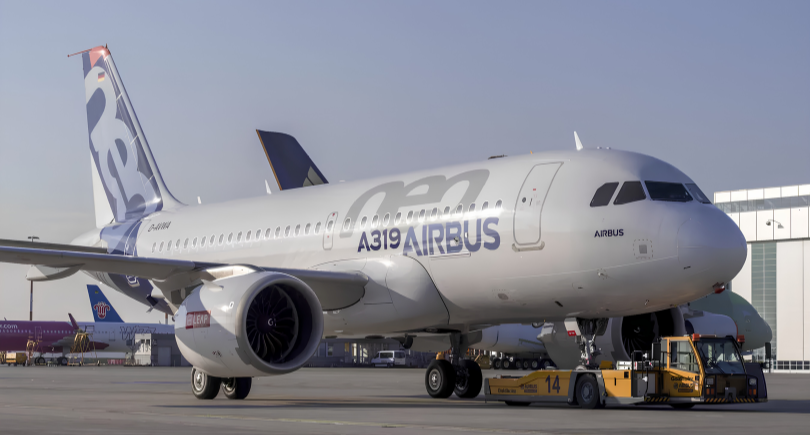
Airbus and Pratt & Whitney have expressed confidence that the long-running engine reliability issues affecting the Airbus A220 fleet will largely be resolved by the end of 2026, marking a significant turning point for one of the aviation industry’s most closely watched engine programmes.
The improvement follows a sharp reduction in the number of Airbus A220 aircraft grounded due to issues with the Pratt & Whitney PW1500G geared turbofan (GTF) engine. According to Airbus, only 2% to 3% of the global A220 fleet is currently out of service because of engine-related problems, a substantial improvement from approximately 17% of aircraft that were grounded late last year.
Speaking during a media briefing at Airbus Canada’s Mirabel production facility, Guillaume Chevasson, Head of the A220 Programme and Chief Executive Officer of Airbus Canada, said the programme has made significant progress. “The AOG crisis is over,” Chevasson said, adding that engine-related technical issues affecting the fleet have now reduced to “close to zero.”
Single-Engine option made A220 vulnerable
The Airbus A220 has been one of the programmes most severely impacted by Pratt & Whitney’s GTF reliability challenges because the aircraft is powered exclusively by the PW1500G engine.
Unlike the A220, operators of the Airbus A320neo family have the flexibility to choose between Pratt & Whitney’s PW1100G GTF engine and the competing CFM LEAP engine, allowing airlines greater operational flexibility when engine availability becomes constrained.
Similarly, Embraer’s E190-E2 and E195-E2 aircraft also use Pratt & Whitney geared turbofan engines, although the Brazilian manufacturer has experienced comparatively fewer operational disruptions.
Maintenance capacity begins to ease shop visit
Airbus and Pratt & Whitney attribute the recovery to a combination of engineering improvements, expanded engine repair capacity and more efficient maintenance processes.
The companies expect that by the end of 2026, no A220 aircraft should remain grounded because of GTF engine issues, with remaining parked aircraft primarily undergoing scheduled heavy maintenance or storage rather than awaiting engine repairs.
The average turnaround time for a PW1500G engine shop visit currently stands at around 200 days, while the larger PW1100G engines powering the A320neo family continue to require approximately 300 days for overhaul. However, Pratt & Whitney says these turnaround times are gradually improving as additional repair capacity comes online and repair processes become more efficient.
Airlines bore cost of grounded fleets
The engine reliability issues have significantly affected airlines operating the A220 over the past several years. Latvia’s airBaltic has repeatedly highlighted the operational and financial impact of grounded aircraft, while Swiss International Air Lines temporarily grounded its fleet of nine A220-100 aircraft earlier this year to prioritise engine availability for its larger A220-300 fleet. Meanwhile, ITA Airways is reportedly seeking around €150 million in damages from Pratt & Whitney after several of its aircraft remained grounded in Naples for more than a year because of engine availability issues.
Wider GTF challenges
Although the PW1500G issues are separate from the powdered metal contamination problem affecting Pratt & Whitney’s PW1100G engines on the Airbus A320neo family, both programmes have placed considerable pressure on airlines and maintenance providers.
The broader GTF crisis has resulted in extensive inspection programmes, constrained engine shop capacity and, in some cases, the early retirement of aircraft to release serviceable engines for active fleets.
The impact has also extended to aircraft production. Earlier this year, Airbus initiated a formal damages claim against Pratt & Whitney, citing engine delivery shortfalls that contributed to aircraft delivery delays during the first half of 2026.
Production plans adjusted
Despite improving engine reliability, Airbus has moderated its A220 production plans for 2026, reducing its target output to 12 aircraft per month as it aligns production with engine availability and broader supply chain realities. Nevertheless, demand for the aircraft remains strong, with airlines including Delta Air Lines, JetBlue Airways and Qantas continuing to expand their A220 commitments as part of long-term fleet modernisation strategies.
The recovery of the A220 programme highlights the critical role of the global engine MRO network in restoring fleet availability. Over the past three years, limited shop capacity, extended turnaround times and shortages of replacement engines placed unprecedented pressure on airlines operating Pratt & Whitney’s geared turbofan-powered fleets.
As Pratt & Whitney expands repair capacity, introduces engineering improvements and streamlines overhaul processes, the industry is beginning to see tangible improvements in aircraft availability. However, the experience has also reinforced the importance of resilient engine MRO infrastructure, greater spare engine availability and closer collaboration between OEMs, airlines and maintenance providers to manage future fleet-wide technical challenges.
For the global MRO industry, the gradual resolution of the A220 engine crisis represents an important milestone, but it also serves as a reminder that next-generation engine programmes require equally robust aftermarket support to ensure long-term operational reliability.