Airbus reported a strong financial performance for the first half of 2026, driven by higher commercial aircraft deliveries and robust growth in its Defence and Space business, while maintaining its full-year production and earnings guidance despite ongoing supply chain challenges.
The European aerospace manufacturer recorded revenues of €33.2 billion during the first six months of the year, a 12% increase compared to €29.6 billion in the same period of 2025. The improved performance was largely supported by a recovery in commercial aircraft deliveries and increased services activity across its aviation businesses.
Commercial Aircraft Deliveries Drive Growth
Airbus delivered 351 commercial aircraft during the first half of 2026, compared with 306 aircraft a year earlier. The deliveries included:
- 44 Airbus A220s
- 271 A320 Family aircraft
- 10 A330s
- 26 A350s
The increase in deliveries helped commercial aircraft revenues grow by 15% to €23.9 billion, although gains were partially offset by the depreciation of the US dollar against the euro.
The company also reported strong order activity, securing 886 gross commercial aircraft orders during the first half, significantly higher than 494 aircraft booked during the same period last year. After cancellations, net orders stood at 821 aircraft, taking Airbus’ commercial aircraft backlog to 9,222 aircraft at the end of June.
The substantial order backlog continues to provide long-term production visibility for the OEM as airlines worldwide accelerate fleet renewal and expansion programmes.
Profitability improves across businesses
Airbus reported Adjusted EBIT of €2.73 billion for the first half of 2026, compared with €2.20 billion in H1 2025.
The company considers Adjusted EBIT its primary measure of operational profitability, excluding one-off programme charges and other exceptional items.
Commercial aircraft operations generated Adjusted EBIT of €1.99 billion, reflecting higher aircraft deliveries, although profitability was partly impacted by less favourable hedge rates.
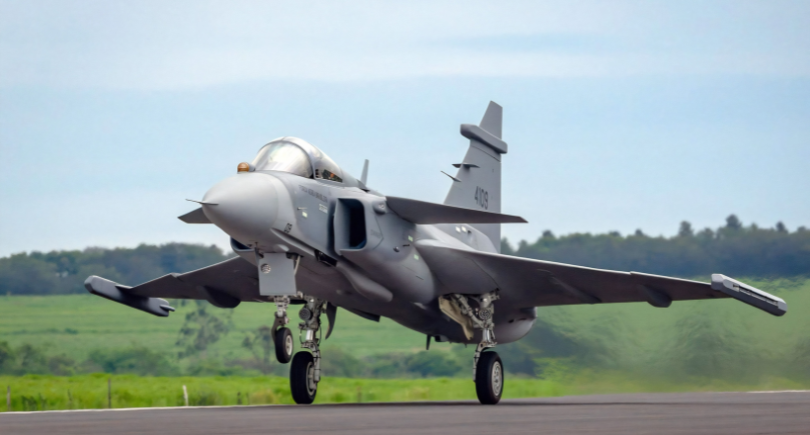
The Defence and Space division delivered one of the strongest performances across the group, with Adjusted EBIT increasing 84% to €487 million, supported by higher production volumes, improved profitability and favourable programme execution.
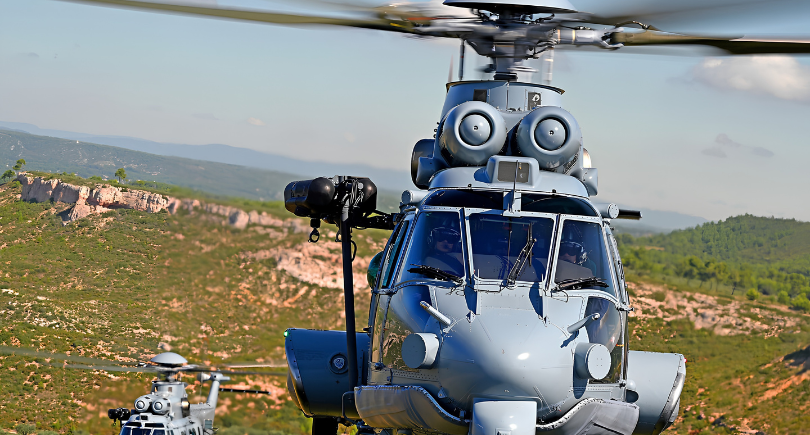
Meanwhile, Airbus Helicopters reported Adjusted EBIT of €240 million, broadly maintaining its performance despite increased research and development expenditure.
Overall, reported EBIT nearly doubled to €2.75 billion, while net income increased to €2.24 billion, compared with €1.53 billion during the first half of 2025.
Reported earnings per share also rose to €2.84, up from €1.93 a year earlier.
Second quarter marks strong recovery
The second quarter represented a significant turnaround after a relatively slow start to the year. Airbus generated €20.53 billion in revenue during the quarter, representing a 28% year-on-year increase and exceeding market expectations.
Second-quarter Adjusted EBIT rose 54% to €2.43 billion, while net profit more than doubled to €1.66 billion.
The improved performance followed stronger aircraft deliveries during the quarter, helping Airbus regain momentum after production disruptions experienced earlier in the year.
“Our good H1 results mainly reflect the higher level of commercial aircraft deliveries and strong performance in Defence and Space, against the backdrop of a complex and fast-changing environment,” said Guillaume Faury, Chief Executive Officer, Airbus.
“We are ramping up across all businesses to meet the growing demand for our civil and military solutions. Our focus on steady execution is paying off, as demonstrated by strong deliveries in Q2.”
Production Ramp-Up Continues
Despite ongoing supply chain pressures affecting parts availability across the aerospace industry, Airbus reaffirmed its long-term production plans.
The company continues to target an A220 production rate of 13 aircraft per month by 2028, A320 Family production rate of between 70 and 75 aircraft per month by the end of 2027, an A330 production rate of five aircraft per month by 2029 and A350 production rate of 12 aircraft per month by 2028.
The production increases are aimed at meeting sustained airline demand while gradually easing the industry’s aircraft supply shortage.
Pratt & Whitney supply challenges begin to ease
Earlier this year, Airbus had warned that engine supply constraints involving Pratt & Whitney were affecting aircraft deliveries and had initiated contractual discussions with the RTX-owned engine manufacturer. However, speaking after the release of the results, Guillaume Faury indicated that the situation had improved significantly.
He said the discussions with Pratt & Whitney are no longer expected to affect Airbus’ 2026 delivery targets, while adding that the company anticipates a more normal supply situation after 2027.
The comments provide reassurance for airlines awaiting new aircraft deliveries, many of whom have faced delays due to engine shortages over the past two years.
Defence business continues to gain momentum
Airbus Defence and Space also reported strong commercial momentum during the first half.
Order intake reached €9.3 billion, compared with €5.1 billion in the same period last year, reflecting increasing demand for military aircraft, satellite systems and defence solutions amid higher global defence spending.
The business unit also benefited from improved profitability and higher production volumes, contributing significantly to Airbus’ overall earnings growth.
Cash flow reflects production investments
Airbus reported free cash flow before customer financing of negative €1.17 billion, an improvement from negative €1.61 billion during the first half of 2025.
The negative cash flow was largely attributed to planned inventory build-up as Airbus increases production rates across multiple programmes.
The company’s gross cash position stood at €23.4 billion at the end of June, while net cash totalled €8.4 billion.
2026 Guidance Remains Unchanged
Reflecting confidence in its production outlook, Airbus maintained its full-year guidance for 2026.
The company continues to target around 870 commercial aircraft deliveries, adjusted EBIT of approximately €7.5 bn, free cash flow before customer financing of around €4.5 bn. Management noted that the guidance assumes no additional disruptions to global trade, air traffic, supply chains or internal operations and includes the impact of currently applicable tariffs.
Faury also clarified that the delivery target of around 870 aircraft represents a practical range of approximately 850 to 890 aircraft, adding that Airbus maintains a high degree of confidence in achieving its objective.
Larger installed fleet drives aftermarket demand
Higher aircraft deliveries will translate into a growing installed fleet requiring long-term maintenance, component support, cabin upgrades and engine services. The company’s plans to significantly increase production rates across the A220, A320neo, A330 and A350 programmes are expected to create sustained demand for maintenance providers, engine overhaul facilities and component repair specialists over the coming decade.
While supply chain constraints remain a challenge for OEMs and operators alike, Airbus’ improving delivery performance and expanding order backlog provide a positive outlook for the global aftermarket. As more next-generation aircraft enter service, MRO organisations will continue investing in technical capabilities, digital maintenance solutions, spare parts inventories and skilled workforce development to support the growing fleet and meet rising airline demand.