
Air India and SIA Engineering Company (SIAEC) are exploring broader maintenance cooperation in India, including a possible joint venture, as the country prepares for a sharp increase in aircraft fleet size and the corresponding demand for maintenance, repair and overhaul (MRO) services.
The discussions build on the companies’ existing relationship at Air India’s Bengaluru MRO facility and could potentially extend across airframe, component and engine maintenance activities. While the two companies have signed a non-binding memorandum to examine wider cooperation, no definitive agreement or joint venture has been announced.
The potential collaboration comes against the backdrop of India’s rapidly expanding commercial aviation fleet. India’s fleet is projected to increase from around 812 aircraft in 2026 to approximately 1,605 aircraft by 2036, driving a corresponding rise in MRO demand.
Annual MRO demand is projected to increase from around US$3.1 billion to US$6.9 billion over the same period. However, only a relatively small proportion of India’s maintenance requirements are currently being fulfilled domestically, with a significant share of MRO expenditure continuing to flow overseas.
For Air India, bringing more of this work back to India represents both a strategic opportunity and a significant capability-building challenge.
Building MRO capacity alongside fleet growth
Air India Group has more than 500 aircraft on order and expects its fleet to exceed 600 aircraft by 2034. The group has also committed more than US$300 million towards developing its MRO capabilities.
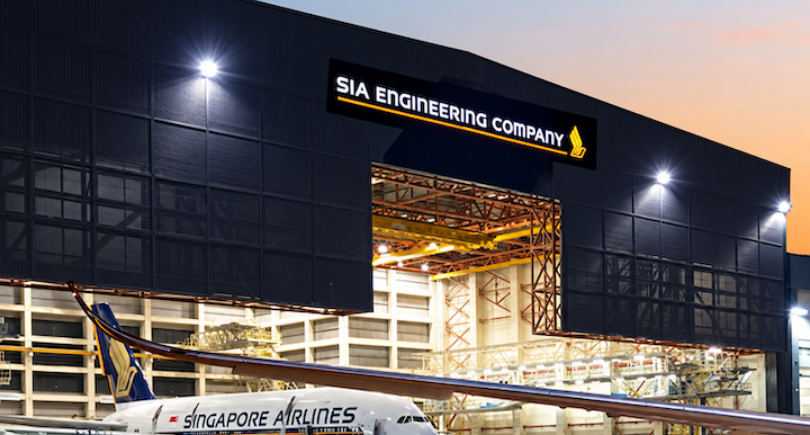
The Bengaluru facility is central to that strategy. Developed with support from SIAEC, the first phase of the facility is designed around a 235-metre hangar capable of accommodating three widebody and two narrowbody aircraft.
The facility is also planned to include specialised workshops supporting composite repairs, cabin work and sheet-metal activities. Further narrowbody bays and an aircraft paint hangar are planned as part of subsequent development.
SIAEC has been involved in the development of the Bengaluru project since 2024, providing Air India with technical expertise as the airline builds its in-house heavy-maintenance capabilities.
The companies already have an established commercial relationship. Under a 12-year agreement, SIAEC provides component support for Air India Group’s A320-family fleet.
The latest discussions could take that relationship into a broader phase, potentially encompassing additional MRO activities and serving the requirements of a larger Indian aviation market.
Widebody D-Checks remain a critical gap
While Indian MRO providers have expanded their capabilities in narrowbody heavy maintenance, significant gaps remain in complex widebody maintenance.
Speaking at MRO Asia-Pacific in Singapore, Sisira Kanta Dash, Chief Strategy Officer-Engineering, Air India, highlighted the need for India to develop the capability to perform full D-check-level maintenance on widebody aircraft rather than limiting domestic capability primarily to C-checks. The challenge, he noted, goes beyond constructing additional hangar space.
A facility requires the appropriate tooling, equipment, infrastructure and, critically, skilled engineers capable of carrying out highly complex maintenance programmes.
This distinction will become increasingly important as India’s widebody fleet expands and more aircraft enter heavy-maintenance cycles. “You have the hangar, everything, but if the manpower skill is not there, it’s of no use,” Dash said.
The comment underlines one of the central challenges facing India’s MRO ambitions: building physical capacity and building human capital must progress together.
Component repair might bring more MRO home
Component MRO represents another area where Air India sees significant potential for localisation.
Dash pointed to the existing structure of the global component repair market, where many repair arrangements are already controlled by OEMs and established MRO providers. Bringing a greater share of these repairs into India will therefore require Indian operators and MRO companies to work with those established players.
SIAEC’s potential role could extend beyond airframe maintenance.
Wilin Ng, Senior Vice President for India and Projects, SIA Engineering Company, said the potential scope of cooperation could include both engine and component maintenance. However, he stressed that each potential activity would need to be supported by a viable business case.
That commercial discipline will be important as India seeks to build a broader MRO ecosystem rather than simply replicate individual maintenance capabilities.
The talent challenge
Infrastructure may be visible, but manpower could prove to be one of the more difficult constraints on India’s MRO expansion.
Recruiting qualified aircraft maintenance engineers for the Bengaluru project is already proving challenging, according to Ng. India currently has an estimated 7,000–11,000 aircraft maintenance engineers, while the requirement could rise to around 25,000 over the next decade as fleet and MRO activity expand.
The challenge is not simply about increasing headcount. The industry needs experienced personnel with the specialised skills required for widebody heavy maintenance, advanced components, structures, composites and other complex MRO activities.
There is also competition for experienced talent across the region. Dash noted that maintenance professionals are moving from India and Singapore to opportunities in the Middle East, adding another dimension to the industry’s workforce challenge.
For India, developing a sustainable talent pipeline will therefore be as important as expanding hangar capacity.
Training partnerships could become a key enabler
Air India has already begun addressing the issue through an engineer cadet programme launched around a year ago. The initial intake was relatively small, but the airline is developing a training facility that could accommodate more than 100 cadets.
The programme is designed to combine formal training with practical exposure to Air India aircraft, allowing trainees to develop hands-on maintenance experience.
SIAEC brings an established training capability of its own. The company works with educational institutions in Singapore to develop aircraft maintenance talent and is exploring potential partnerships with Indian institutions.
Ng said one possible model could allow Indian trainees to undertake practical training in Singapore before returning to India.
Such a model could help bridge the gap between classroom-based training and the practical experience required in a commercial MRO environment, while also creating a potential pathway for developing engineers capable of supporting increasingly complex maintenance programmes in India.
From Air India MRO to a wider Indian market
The potential cooperation also raises the prospect of the partners eventually supporting other airlines operating from India. For the immediate future, however, Air India’s own fleet remains the priority.
With hundreds of aircraft already on order and its existing fleet continuing to grow, Air India has substantial internal demand to absorb as its Bengaluru MRO capabilities mature.
Dash indicated that the airline does not expect to move significantly into third-party maintenance work in the near term.
This approach reflects the scale of the task ahead. Before opening substantial capacity to external customers, Air India will need to establish the infrastructure, workforce, processes and technical capability required to support its own rapidly expanding fleet.
A Test for India’s MRO ambitions
The discussions between Air India and SIAEC come at a pivotal stage for India’s MRO sector. The country has the fleet growth to support a much larger domestic MRO market. It is investing in infrastructure, developing new training programmes and attracting international MRO partnerships. The challenge now is to translate those investments into the depth of capability required to retain more maintenance work within the country.
The potential SIAEC cooperation illustrates how that transition could take shape by combining Air India’s growing fleet and domestic infrastructure with SIAEC’s established MRO, component, engineering and training capabilities.
Whether the eventual structure takes the form of a joint venture or another commercial arrangement will depend on the business case for individual activities. India’s MRO ambitions will need to advance on several fronts simultaneously, like hangars, equipment, component capability, technical partnerships and, above all, skilled manpower.
As India’s fleet approaches the next phase of its growth, the ability to develop those capabilities in parallel could determine how much of the country’s future MRO demand is ultimately serviced at home.