


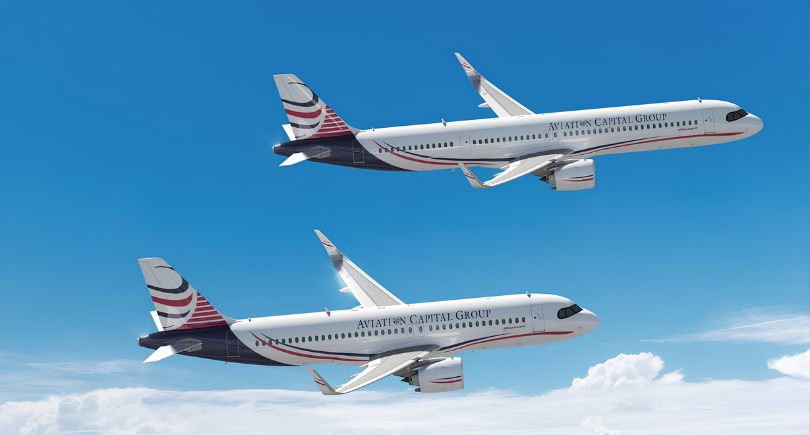

Aviation Capital Group (ACG) has finalised an order for 75 Airbus A320neo family aircraft, its largest aircraft order to date, expanding its narrowbody portfolio and extending its delivery pipeline through 2035. The agreement also points to continued long-term demand for maintenance, repair and overhaul (MRO) services as the next-generation fleet grows.
The aircraft are scheduled for delivery between 2032 and 2035. The agreement includes conversion rights between variants within the A320neo family, allowing ACG to adjust its delivery mix in response to changing airline requirements.
The order brings ACG’s outstanding commitments for the A320neo family to 115 aircraft. As of 30 June 2026, the lessor had 118 A320neo family aircraft in its fleet, giving it an established presence in the new-generation narrowbody market alongside its substantial future delivery pipeline.
For the aftermarket, the order represents a long-term indicator of demand rather than an immediate increase in maintenance workload. As additional A320neo family aircraft enter service over the next decade, airlines, lessors and MRO providers will need to plan for the maintenance capacity, technical support and component availability required throughout their operating lives.
Thomas Baker, Chief Executive Officer and President of ACG, said the order reflects the company’s strategy of investing in aircraft sought by airlines worldwide.
“ACG’s portfolio strategy is focused on new-technology narrowbody aircraft that are most in-demand with airlines globally. Placing the largest order in our nearly 40-year history is a statement of confidence in the long-term future of air travel and in ACG’s important role as a conduit between airlines, aircraft and capital.”
Expanding the future narrowbody fleet
The A320neo family remains central to airline fleet renewal and expansion strategies, with operators using the aircraft to replace older narrowbodies and increase capacity. For lessors, placing large forward orders provides access to aircraft that can be leased to airlines as delivery slots become available.
Rob Downes, Chief OEM Officer of ACG, said the additional aircraft would help the company respond to both replacement and growth requirements among its airline customers.
“The A320neo Family remains one of the most sought-after aircraft families among our airline customers, supporting both their replacement and growth requirements. This order gives ACG additional capacity to meet that demand, extends our orderbook pipeline into the mid-2030s and positions us for further growth.”
The conversion rights included in the agreement provide flexibility to adjust the mix of aircraft variants. That flexibility is relevant to both fleet planning and the future aftermarket, as the configuration and engine selection of delivered aircraft influence operators’ training, maintenance planning, tooling and spare-parts requirements.
Long-term implications for MRO and engine services
Although deliveries will not begin until 2032, the scale of the order provides a longer-term signal for the commercial aviation aftermarket. Each aircraft entering service adds to the installed base requiring scheduled inspections, airframe maintenance, component repair, landing gear overhaul, avionics support, and replacement parts as operating hours and flight cycles accumulate.
Engine maintenance will be another major element of the lifecycle requirement. The A320neo family is powered by either the CFM International LEAP-1A or Pratt & Whitney PW1100G-JM geared turbofan, depending on the aircraft configuration. These engine programmes have their own maintenance intervals, repair requirements, parts supply chains and shop-visit capacity considerations.
For airlines and lessors, effective lifecycle planning involves coordinating maintenance schedules with aircraft utilisation, lease conditions and the timing of major component events. Lessors also need to monitor aircraft technical records, maintenance status and asset condition to support lease transitions and preserve residual value.
The new order does not establish specific MRO agreements or determine where future maintenance will be performed. However, it reinforces the need for the global aftermarket to continue developing capacity, repair capability, and technical expertise as the A320neo fleet expands. Engine and component service providers will need to align their long-term investments with the fleet’s growth and the maintenance demand generated as aircraft mature.
Technology and operating efficiency
The A320neo family incorporates updated engines and aerodynamic improvements intended to reduce fuel consumption and emissions. Airbus states that the family offers up to 20% lower fuel consumption and CO₂ emissions per seat compared with previous-generation aircraft, alongside a 50% reduction in noise.
These efficiency gains are important to airline operating economics, while the newer aircraft also introduce ongoing requirements for specialised technical support. As the fleet grows, MRO providers will need to maintain capabilities across engine systems, aircraft components, avionics and other equipment fitted to the delivered configurations.
For operators transitioning from older aircraft, fleet commonality and standardised maintenance procedures can support planning, although the exact benefits depend on fleet composition, engine choice and individual operator requirements.
Benoît de Saint-Exupéry, Airbus Executive Vice President Sales for the Commercial Aircraft business, highlighted the longstanding relationship between the manufacturer and the lessor.
“This major investment reinforces our long-term and important partnership which dates back to 2007 when ACG placed its first order with Airbus. ACG will be able to offer its customers the A320neo Family well into the next decade. We salute ACG’s selection of the A320neo Family – the world’s most modern and efficient single-aisle aircraft.”
Aftermarket demand extends into the next decade
ACG’s 75-aircraft order extends its A320neo family delivery commitments into the mid-2030s and reinforces the role of new-generation narrowbodies in airline fleet strategies. For the MRO sector, the immediate impact is limited because the aircraft will be delivered years from now, but the order provides visibility into the future installed base that service providers will need to support.
As these aircraft accumulate flight hours and cycles, demand will develop across engine shop visits, component maintenance, structural repairs, parts distribution and technical asset management. The timing and scale of that demand will depend on delivery schedules, utilisation rates and maintenance requirements across individual fleets.
The agreement therefore represents more than a fleet investment. It is also a long-range indicator of the maintenance infrastructure, workforce capabilities and aftermarket capacity that will be needed to support the continued expansion of the A320neo family.


