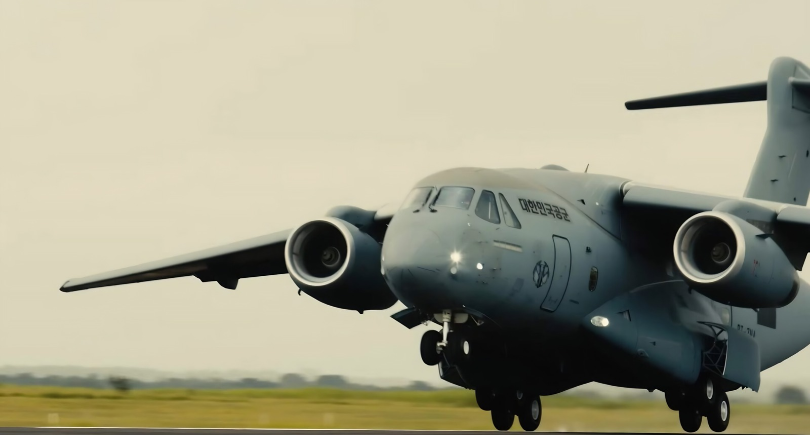

Arrival of the first ROKAF aircraft marks an important export milestone for Embraer, as the Brazilian manufacturer seeks to expand its presence in a market long dominated by established military airlifters
Embraer’s C-390 Millennium is taking another significant step in its international expansion, with the first aircraft ordered by the Republic of Korea Air Force (ROKAF) arriving in South Korea. The aircraft landed at Seoul Air Base after a long ferry flight from Brazil, travelling via Oman, India and the Philippines. Its arrival comes ahead of an anticipated formal handover in December, marking South Korea’s entry into the growing group of international operators of the Brazilian-built military transport aircraft.
The delivery represents an important milestone for Embraer, which has been steadily positioning the C-390 as an alternative to established military transport platforms, particularly Lockheed Martin’s C-130J Super Hercules. South Korea selected the aircraft in December 2023 under its Large Transport Aircraft II (LTA-II) programme. The acquisition covers three aircraft, with the remaining two expected to be delivered by the end of 2027.
Before entering operational service, the first aircraft will undergo production flights and the integration of systems required to meet ROKAF specifications. Embraer had announced in February 2026 that the aircraft had reached the final stage of its assembly process. Its arrival in South Korea now brings the programme closer to formal delivery and operational induction.
For Embraer, the Korean contract is particularly significant because it represents the manufacturer’s first C-390 customer in Asia. It also provides an opportunity to establish the aircraft in a region with substantial military aviation requirements and a strong emphasis on modernising transport fleets.
C-390 strengthens position in global airlift market
The C-390 Millennium has emerged as one of the more prominent contenders in the medium military transport aircraft segment. Developed by Embraer, the twin-engine jet-powered aircraft is designed to perform a range of missions, including troop and cargo transport, medical evacuation, humanitarian assistance, aerial resupply and other military logistics operations.
One of its key selling points is its combination of payload capacity, speed and operational flexibility. Embraer states that the aircraft can carry up to 26 tonnes of payload and achieve speeds of up to 470 knots. These capabilities are intended to offer military operators greater flexibility when moving personnel, equipment and supplies over long distances.
Unlike conventional turboprop military transports, the C-390 uses jet engines, giving it a different performance profile in terms of speed and mission execution. Its design also supports operations from semi-prepared and unpaved runways, broadening the range of environments in which it can operate.
The aircraft’s versatility is an important part of its export proposition. Military operators are increasingly looking for platforms that can perform multiple roles rather than maintaining separate aircraft fleets for different transport and support requirements.
The C-390’s growing customer base suggests that Embraer is making progress in establishing itself in this market. However, its long-term success will depend not only on winning new contracts but also on demonstrating consistent delivery performance, reliable aftermarket support and the ability to sustain aircraft availability throughout their operational lives.
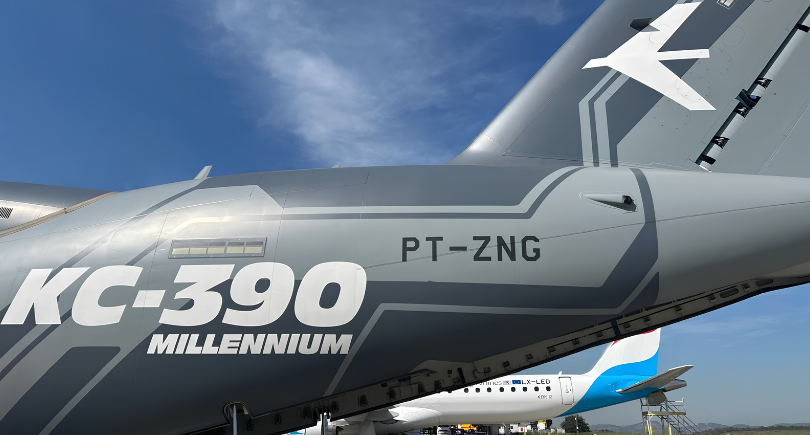
Competition with the C-130J Super Hercules
The C-390’s principal competitor in the medium military airlift segment is Lockheed Martin’s C-130J Super Hercules, a platform with an established global operating base and decades of operational experience behind the Hercules family.
The C-130J benefits from a mature international support network, a large installed fleet and established relationships with air forces around the world. Its turboprop configuration and operational flexibility have made it a preferred choice for military transport missions across a wide range of operating environments.
The C-390, meanwhile, is seeking to differentiate itself through its higher speed, payload capability and modern aircraft systems. Its jet-powered configuration offers a different approach to military airlift, particularly for operators that prioritise faster transportation and the ability to perform multiple mission types with a single platform.
South Korea’s selection of the C-390 over competing aircraft was an important endorsement of this proposition. The Brazilian aircraft has also attracted interest from several other countries seeking to replace ageing transport fleets or expand their military logistics capabilities.
The competition is therefore not simply about aircraft performance. Acquisition cost, lifecycle support, maintenance infrastructure, spare-parts availability, training requirements and long-term industrial partnerships will all influence purchasing decisions.
For Embraer, building confidence in these areas will be just as important as demonstrating the aircraft’s operational capabilities.
Changing competitive landscape
The international military transport market has also undergone significant changes in recent years, creating opportunities for newer platforms.
Ukraine’s Antonov had been seeking to strengthen its position in the medium transport aircraft segment through the An-178 programme. The aircraft was developed as a modern successor to earlier Antonov transport designs and was intended to compete in the international market.
However, the annexation of Crimea in 2014 disrupted Ukraine’s aerospace supply chains and affected Antonov’s access to Russian-origin components. The company subsequently worked towards replacing these components with Western alternatives and reviving the programme.
Russia’s full-scale invasion of Ukraine in 2022 further complicated the prospects for new-build Antonov aircraft, with the country’s aviation manufacturing and industrial infrastructure facing severe wartime constraints.
This has weakened the An-178’s immediate prospects in the international market, leaving potential customers to consider other available platforms.
The C-390 has consequently been operating in a market where established manufacturers and newer competitors are competing for fleet replacement and modernisation programmes. While it would be simplistic to attribute Embraer’s progress to the disruption of the Antonov programme alone, the changing competitive environment has created additional opportunities for the Brazilian manufacturer.
Growing International Orders, But Production Must Catch Up
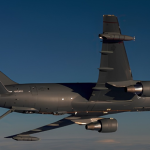
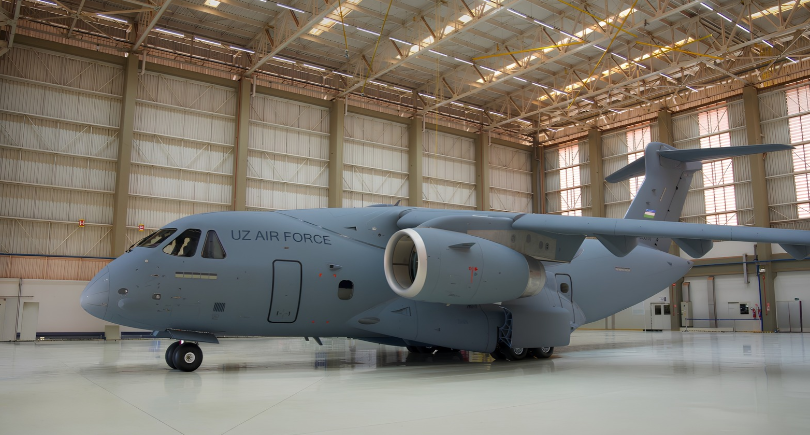
Embraer has secured growing international interest in the C-390 and its KC-390 tanker-transport variant. The aircraft has attracted orders and selections from multiple countries, including Brazil, Portugal, Hungary, the Netherlands, Austria, the Czech Republic, Sweden, South Korea and Uzbekistan, among others.
The United Arab Emirates has emerged as a particularly significant customer, with ten firm aircraft orders and options for another ten.
Despite this progress, production volumes remain relatively modest compared with those of established military transport manufacturers.
Based on the programme figures reported in the source, the C-390 family has accumulated approximately 62 orders, comprising 30 C-390s and 32 KC-390s. Around 16 aircraft had been delivered, leaving a substantial order backlog. The company has also secured additional options, providing potential scope for future fleet expansion.
Delivery figures underline the challenge facing Embraer. The manufacturer delivered three aircraft in 2024 and another three in 2025, while two were delivered during the first three quarters of 2026.
Embraer has outlined plans to increase annual production to six aircraft in 2026, with a gradual ramp-up towards ten aircraft annually by 2030. This expansion will be critical as the manufacturer works to fulfil existing commitments while pursuing new export campaigns.
The comparison with Lockheed Martin highlights the scale of the challenge. The C-130J production programme has a considerably higher annual output, with deliveries running at approximately 20 aircraft in recent years. Its established production infrastructure and global customer base give it a significant advantage in terms of delivery capacity and aftermarket support.
For Embraer, increasing production will require more than expanding final assembly operations. It will also depend on strengthening supplier capacity, maintaining component availability, managing production schedules and developing the support infrastructure required by an expanding international fleet.
Aftermarket support critical to long-term growth
As the C-390 fleet expands, aftermarket support will become an increasingly important part of Embraer’s competitive strategy. Military transport aircraft operate across demanding environments and are often required to maintain high availability for transport, logistics and emergency response missions. For operators, aircraft acquisition is only the beginning of a long-term commitment involving maintenance, repair, overhaul, spare-parts management, technical support and crew training.
Embraer will need to ensure that its growing customer base has access to the necessary maintenance infrastructure and technical resources. This includes establishing regional support arrangements, developing local industry partnerships and ensuring timely access to critical components.
The growing geographical spread of C-390 operators makes this particularly relevant. Customers in Europe, Asia and the Middle East will require dependable support arrangements that minimise aircraft downtime and ensure operational readiness.
South Korea’s entry into the programme also provides Embraer with an opportunity to strengthen its presence in the Asia-Pacific region. The country’s aerospace and defence industrial base could offer opportunities for local supplier participation and long-term support collaboration.
For the MRO sector, the expansion of the C-390 fleet represents a developing market opportunity, particularly as more operators induct the aircraft and establish their maintenance and support requirements.
Can Embraer Sustain Its Growth Momentum?
The arrival of South Korea’s first C-390 is more than another aircraft delivery. It is a demonstration of Embraer’s ability to take its military transport programme into new geographical markets and compete against manufacturers with much longer-established positions in the sector.
The aircraft’s growing international customer base, combined with increasing demand for modern military transport capabilities, provides a strong foundation for future growth. However, converting this interest into sustained market share will require Embraer to address the challenges of production capacity, supply-chain resilience and global aftermarket support.
With the remaining South Korean aircraft expected by the end of 2027 and production targeted to reach ten aircraft annually by 2030, the coming years will be important for the C-390 programme.
The real test for Embraer will be whether it can translate its growing order book into timely deliveries and a dependable global support network. In a market where aircraft availability and operational readiness are as important as performance, production scale and lifecycle support could ultimately determine how far the C-390 can challenge the established leaders of military air transport.