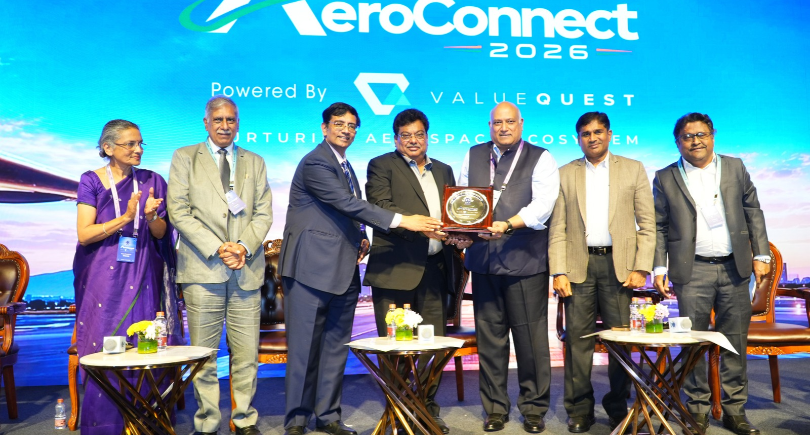

The Aerospace India Association (AIA) has outlined an ambitious roadmap to strengthen India’s position in the global aerospace industry, targeting a rise in the country’s share of the global aerospace supply chain from 1% to 10% over the next decade. The roadmap was discussed at AeroConnect 2026, the association’s first annual conference, held in Bengaluru on November 20. Powered by ValueQuest, the event brought together more than 300 industry leaders, MSMEs, policymakers and academics to deliberate on the opportunities and challenges shaping India’s aerospace manufacturing ecosystem.
The conference focused on strengthening domestic manufacturing capabilities, expanding partnerships with global original equipment manufacturers (OEMs), addressing supply chain gaps and improving the competitiveness of Indian manufacturers. Discussions also highlighted the need for a coordinated approach involving industry, government and academia to build capabilities across the aerospace value chain.
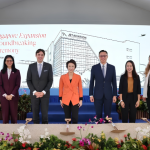
The inaugural session was attended by Capt. G R Gopinath, Managing Director, Deccan Air Charters; Dr B.V.R. Mohan Reddy, Founder Chairman, CYIENT; Smt. Khushboo Goel Chowdhary, IAS, CEO, Invest Karnataka Forum; Aniket Dharamshi, Managing Partner, ValueQuest; and Aravind Mellegeri, Chairman and CEO, Aequs Ltd, among others.
Karnataka’s role as a major aerospace manufacturing hub featured prominently in the discussions. Khushboo Goel Chowdhary highlighted the state’s new Aerospace Policy 2026, which targets ₹60,000 crore in investments, with a focus on strengthening MSMEs, promoting technology and innovation, developing skilled talent and expanding aerospace clusters beyond Bengaluru. The state also outlined its ambition to increase its contribution to India’s aerospace exports from nearly 65% to 75%.
Aravind Mellegeri emphasised that India’s growing aviation sector must translate into greater domestic aerospace manufacturing and value creation. He called for a national aerospace manufacturing policy that aligns central and state incentives, the development of integrated manufacturing ecosystems and long-term capital support for research and development.
AIA President F R Singhvi highlighted the need for a common industry platform to bring manufacturers, policymakers and academia together to address shared challenges. He noted that the association aims to help Indian aerospace manufacturers move from a sector valued at nearly US$2 billion towards a US$20 billion opportunity by enabling them to capture a greater share of the global supply chain.
Addressing the gathering at the evening event, M.B. Patil, Karnataka’s Minister for Large and Medium Industries and Infrastructure Development, reiterated the state’s commitment to strengthening aerospace and defence manufacturing. He highlighted the importance of improving access to specialised materials, common manufacturing facilities, advanced manufacturing capabilities, domestic supply chains and skill development.
Closing the conference, Dr S. Dwarakanath, Director General, AIA, called for the discussions to translate into concrete industry initiatives, with MSMEs and global partners working together to build manufacturing and technological capabilities.
In addition to increasing India’s share of the global aerospace supply chain to 10%, AIA’s 10-year ambitions include growing Indian civil aerospace manufacturing exports tenfold to US$20 billion annually and increasing domestic value addition from less than 30% to 60%. The association plans to work with industry stakeholders and government bodies on initiatives covering certification, raw materials, common manufacturing facilities, quality systems, and workforce development.