
Brazilian aerospace manufacturer projects demand for at least 500 aircraft in the 80–146-seat segment over the next two decades, as it explores manufacturing collaboration with the Adani Group.
India’s rapidly expanding aviation market could offer a significant opportunity for regional aircraft manufacturers, with Brazilian aerospace major Embraer identifying an underserved segment between turboprop aircraft and larger narrowbody jets. The company estimates that India will require at least 500 aircraft in the 80–146-seat category over the next 20 years, highlighting the potential for regional jets to support connectivity across markets that remain inadequately served by direct air links.
Embraer has described this opportunity as a ‘Blue Ocean’ market, referring to an area of demand where competition remains limited, and existing aircraft offerings do not fully address airline requirements. The company believes that India’s regional aviation expansion, combined with the need to connect smaller cities and underserved routes, could create substantial opportunities for its E-Jet family.
Speaking on the sidelines of the Association of Asia Pacific Airlines (AAPA) annual assembly in Kuala Lumpur, Raul Villaron, Vice President and Head of Asia Pacific at Embraer Commercial Aviation, highlighted the scale of India’s untapped regional connectivity market.
According to Villaron, there are at least 1,200 markets in India that are not served through direct connections. Around 90% of these markets involve distances exceeding 500 kilometres but have passenger demand of fewer than 100 people.
He identified this segment as an important gap in the country’s existing aircraft deployment model, where turboprops generally serve smaller regional routes while larger narrowbody aircraft operate on higher-demand sectors.
Bridging the gap
Embraer’s assessment points to a structural opportunity in India’s regional aviation network. While turboprop aircraft have traditionally supported connectivity on shorter routes and smaller markets, larger narrowbody aircraft are generally deployed where passenger demand can support higher capacity.
This leaves an intermediate segment of routes where distances are relatively long, but passenger volumes may not justify operating larger aircraft.
Embraer believes its regional jet portfolio could address this gap by allowing airlines to operate more appropriately sized aircraft while expanding direct connectivity between cities.
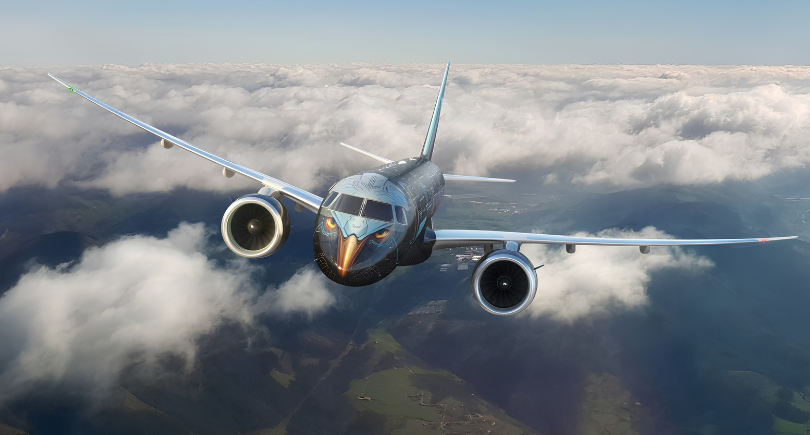
The company’s E-Jet family includes aircraft designed for different regional and short-haul requirements. Its E175, with a seating capacity of up to 88 passengers, is being positioned as a potential option for routes under India’s regional connectivity scheme, UDAN. The E195-E2, meanwhile, can accommodate up to 124 passengers, offering a larger capacity option for growing regional markets.
The ability to match aircraft capacity with route demand could help airlines explore new routes, improve network flexibility and serve markets that may not currently support larger aircraft operations.
UDAN could support regional aircraft demand
India’s regional connectivity programme, Ude Desh ka Aam Nagrik (UDAN), remains an important part of the country’s efforts to improve air connectivity beyond major metropolitan centres.
Launched in October 2016, the scheme aims to make air travel more accessible by supporting connectivity to underserved and unserved airports. Earlier this year, the government approved a modified version of the programme for a further 10 years, extending it until 2035–36 with an outlay of Rs 28,840 crore.
Embraer sees potential for aircraft such as the E175 to support routes where passenger demand, distance and operating economics require smaller-capacity jet aircraft.
For airlines, the availability of appropriately sized aircraft could offer greater flexibility in developing regional networks. It could also help connect secondary and emerging urban centres directly, reducing dependence on connections through larger aviation hubs.
However, the commercial viability of these routes will depend on passenger demand, operating costs, airport infrastructure and the ability of airlines to develop sustainable network models.
Embraer and Adani explore Indian manufacturing opportunity
The regional aircraft opportunity is also linked to Embraer’s broader ambitions in India, particularly its proposed manufacturing collaboration with the Adani Group.
In January 2026, the two companies announced a strategic collaboration to explore the establishment of a regional aircraft manufacturing facility in India. The initiative reflects the growing interest in developing domestic aerospace manufacturing capabilities and strengthening India’s participation in the global aircraft supply chain.
Villaron said Embraer continues to work with the Adani Group and remains keen to take the project forward, although further details have not yet been disclosed.
A potential manufacturing ecosystem could have implications beyond aircraft assembly. It could create opportunities for domestic suppliers, component manufacturers, engineering companies and aerospace service providers to participate in regional aircraft production and support activities.
For India’s aviation aftermarket, such an ecosystem could also create longer-term opportunities in component maintenance, repair capabilities, spare parts distribution, technical training and lifecycle support, depending on the scale and structure of the eventual programme.
Strengthening Embraer’s Presence in India
Embraer has been expanding its presence across India’s commercial aviation, defence, business aviation, services and support, and urban air mobility segments. The company opened a new office in New Delhi in October 2025 as part of its efforts to strengthen engagement with the Indian aerospace market.
Its E-Jets have been operating in India since 2005. The manufacturer currently has nearly 50 aircraft in the country, serving the Indian Air Force, government agencies, business aviation operators, and commercial airline Star Air.
The existing fleet provides an established operational presence, while the company’s proposed regional manufacturing initiative could potentially deepen its engagement with India’s aviation ecosystem.
The company is also looking at opportunities across different aviation segments as India continues to expand its commercial and defence aerospace capabilities.
Asia-Pacific regional aircraft demand strengthens the outlook
Embraer’s interest in India forms part of a wider regional growth opportunity. Earlier this month, the company projected demand for 2,520 aircraft with up to 150 seats across the Asia-Pacific region over the next 20 years.
India’s projected requirement of at least 500 aircraft in the 80–146-seat segment represents an important part of this broader regional outlook.
The demand reflects the potential for smaller-capacity aircraft to support new routes, strengthen regional connectivity and provide airlines with additional fleet-planning options.
For the aviation industry, the opportunity extends beyond aircraft procurement. A larger regional aircraft fleet will require supporting infrastructure, maintenance capabilities, trained personnel, component availability and reliable aftermarket services.
Opportunity
Embraer’s ‘Blue Ocean’ assessment highlights a potentially important shift in how India’s regional aviation market could evolve. Rather than relying exclusively on turboprops for smaller markets and larger narrowbody aircraft for high-density routes, airlines could increasingly explore intermediate-capacity aircraft to serve underserved city pairs.
For the MRO industry, the emergence of a larger regional jet fleet could open another area of aftermarket demand. As aircraft numbers grow, maintenance providers will need to develop appropriate technical capabilities, establish component support networks and ensure the availability of specialised maintenance resources.
A potential domestic manufacturing programme could further strengthen these opportunities by encouraging local participation in the aircraft supply chain and creating a foundation for long-term lifecycle support.
The scale of the opportunity will ultimately depend on airline commitments, route economics, manufacturing decisions and the development of a sustainable regional aviation ecosystem.
For Embraer, India’s ‘Blue Ocean’ opportunity is therefore not simply about selling more regional jets. It is about addressing an underserved connectivity market while establishing a deeper presence in one of the world’s fastest-growing aviation markets.